www.aljazeerah.info
2026 News
Archives
Mission & Name
Conflict Terminology
Editorials
Gaza Holocaust
Gulf War
Isdood
Islam
News
News Photos
Opinion Editorials
US Foreign Policy (Dr. El-Najjar's Articles)
www.aljazeerah.info
|
Editorial Note: The following news reports are summaries from original sources. They may also include corrections of Arabic names and political terminology. Comments are in parentheses. |
***
US-Iranian Talks in Geneva, Signing the MoU, Opening Strait of Hurmuz, Lifting Blockade and Sanctions, Releasing Frozen Funds, Confirming Ceasefire in Lebanon
June 23, 2026
***
 |
|
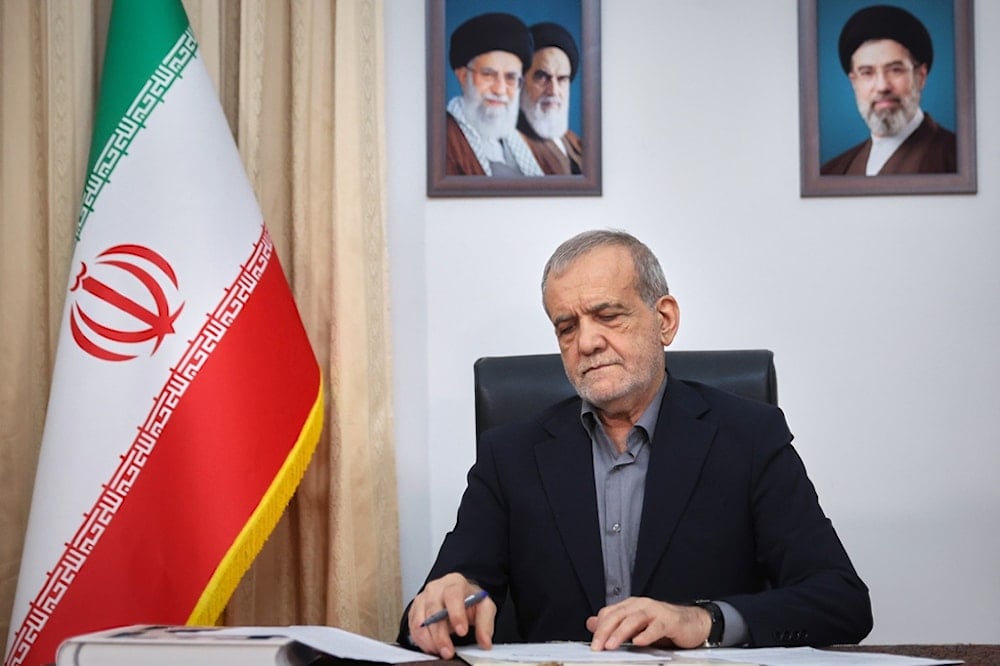
| Iranian President, Mas'oud Pezeshkian, signing the Iranian-US MoU, in Tehran, on June 18, 2026. |
US Vice President, J.D. Vance, delivers remarks in Lucerne, Switzerland, after peace talks with Iran, June 21, 2026. |
 |
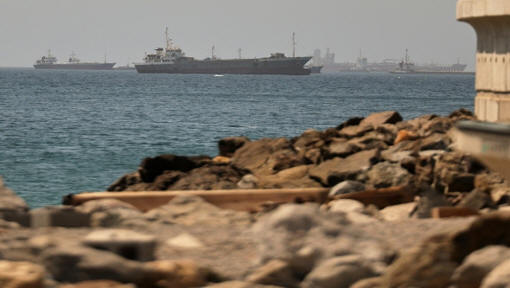 |
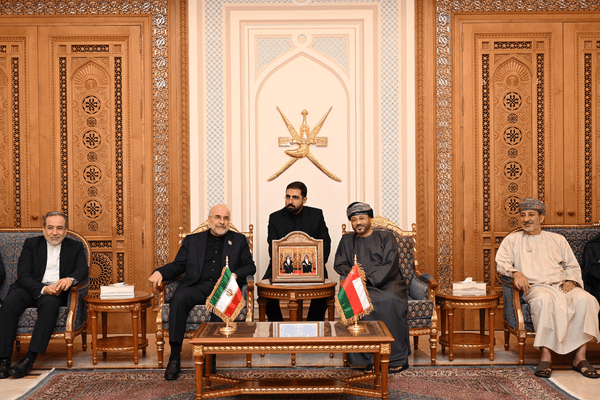
| Iranian Parliament Speaker, Qalibaf, and FM, Araqchi, hosted by the Omani FM, Badr El-Bousa'eedi, in Muscat, June 22, 2026. | Qalibaf said that the Strait of Hormuz would remain under Iranian administration, above seen oil tankers in the Gulf of Oman, June 16, 2026. |
US-Iranian Talks in Geneva, Signing the MoU, Opening Strait of Hurmuz, Lifting Blockade and Sanctions, Releasing Frozen Funds, Confirming Ceasefire in Lebanon, June 23, 2026 |
|
***
Vance says talks with Iranian officials set ‘good foundation’ for a deal to end the war
By AAMER MADHANI, JAMEY KEATEN, SEUNG MIN KIM and JOSH BOAK
June 23, 2026
OBBUERGEN, Switzerland (AP) —
US Vice President, JD Vance, on Monday said his lengthy talks with senior Iranian officials in Switzerland created a “good foundation for a successful final deal” as they seek a permanent end to the war that the U.S. and Israel began in late February.
Vance and U.S. officials claimed progress on multiple fronts, including the establishment of “mechanisms” to ensure the Strait of Hormuz, a vital waterway for global energy shipments, stays open and to address fighting between Israel and Iranian-backed Hezbollah militants in southern Lebanon, where a ceasefire appeared to be holding.
The interim deal to end the fighting in Iran, signed last week by the leaders of the U.S. and Iran, sets a 60-day period for negotiations on key issues, including the future of Tehran’s nuclear program amid concerns that Iran wants to use it for military purposes, a claim the country denies.
The vice president departed Switzerland as technical teams were still negotiating, and U.S. President Donald Trump talked up the efforts to keep the strait open to create “an oil gusher” as he stressed that the key to resolving the war was “respect” from Iran.
“As long as they respect us, I don’t want to use the word fear because that’s an inappropriate word, but as long as they respect us, we’re not going to have any trouble,” Trump said from the Oval Office.
***
Iran says Hormuz will remain under Tehran’s administration after talks
Al-Mayadeen, June 23, 2026
US-Iran talks advance on safe passage, Lebanon, sanctions relief, and frozen assets.
The Strait of Hormuz would remain under Iranian administration, said Iran's Parliament Speaker and top negotiator, Mohammad Baqir Qalibaf, as US-Iran talks in Switzerland moved into a new phase focused on implementation, sanctions relief, maritime passage, Lebanon, and frozen Iranian assets.
Speaking after returning from negotiations at the Burgenstock resort in Switzerland, Qalibaf said, "The Strait of Hormuz will never return to its pre-war conditions and will be administered by the Islamic Republic of Iran, in accordance with international law," according to Iranian state media.
The talks, mediated by Qatar and Pakistan, produced a 60-day roadmap toward a broader agreement between Tehran and Washington. Technical-level meetings are expected to continue this week, with working groups set to address the details of the arrangement.
Hormuz at center of negotiations
The Strait of Hormuz has emerged as one of the central files in the talks, after Iran repeatedly linked the reopening of the vital waterway to an end to Israeli attacks on Lebanon and broader US commitments under the interim understanding.
Tehran and Washington agreed to establish a communication line aimed at preventing incidents in the Strait and maintaining safe passage for commercial vessels.
Qatari and Pakistani mediators said the mechanism was designed "to avoid incidents and miscommunication with the aim of safe passage for commercial vessels" through the waterway.
Maritime tracking firms reported that traffic through Hormuz had begun to recover, with oil tankers crossing the strait on Monday after a period of weaker flows caused by renewed tensions.
Sanctions waiver and frozen funds
The United States also issued a temporary 60-day license allowing the sale, delivery, and transport of Iranian crude oil, petrochemicals, and petroleum products until August 21. The waiver covers related services, including banking, insurance, and transportation.
In a video published on his Telegram account, Ghalibaf described the Swiss talks as having produced "good achievements".
"In my view, this trip had good achievements, especially regarding the discussion of the Strait, the Lebanon discussions, the question of oil waiver, and the matter of releasing the frozen funds," he said.
Qalibaf also said an agreement had been reached for the release of $12 billion in frozen Iranian assets. Washington, however, has suggested that the released funds would be directed toward purchases such as US agricultural goods, a claim Tehran has rejected.
The emerging arrangement is expected to grant Iran a measure of sanctions relief, alongside access to some of its frozen assets.
"Of course, we believe we are still at the beginning of this work and must continue our efforts," Ghalibaf added.
Lebanon remains key test
Lebanon has become another major point in the negotiations, with Tehran insisting that Israeli attacks must stop for the interim understanding to hold.
A deconfliction mechanism involving Washington, Tehran, and Beirut has been set up in an attempt to secure a working ceasefire in Lebanon. However, "Israel" has said it will continue military operations in Southern Lebanon.
Iranian officials have warned that continued Israeli attacks on Lebanon could threaten the broader track with Washington.
Nuclear inspections disputed
US Vice President JD Vance said the talks had laid the groundwork for a final agreement and claimed that Iran had agreed to allow International Atomic Energy Agency inspectors back into the country.
Tehran, however, denied that nuclear issues had been discussed or that Iran had made new nuclear commitments.
The dispute points to the fragility of the process, as both sides continue to frame the outcome differently while trying to preserve the momentum of the talks.
Iranian state media reported that Qalibaf also made a stop in Oman, which shares the Strait of Hormuz with Iran, as discussions continue over future arrangements in the strategic waterway.
***
Turkey, Egypt, Pakistan, Saudi Arabia welcome US-Iran agreement
ByAl Mayadeen English Source: News Websites 21 Jun 2026 23:30
2 Min Read
The foreign ministers of Turkey, Egypt, Pakistan and Saudi Arabia have welcomed the US-Iran memorandum as a "constructive step" toward de-escalation, while stressing the need to address the Palestinian issue for lasting regional peace.
The foreign ministers of Turkey, Egypt, Pakistan and Saudi Arabia have welcomed the signing of the memorandum of understanding between the United States and Iran, describing it as a "constructive step" toward de-escalation and an end to the US-Israeli war on Iran, which posed significant risks to regional security and global energy markets.
In a joint statement published by the Turkish Foreign Ministry following a meeting in Cairo, the ministers said they "welcomed in particular the signing of the Islamabad Memorandum of Understanding."
They viewed the development as "a constructive step towards de-escalation and towards ending a war which posed significant risks to regional security and stability, as well as to energy markets, international maritime routes, global supply chains, and international trade."
The ministers praised the efforts of states and international mediators that helped facilitate the agreement, particularly highlighting Pakistan's role in organizing the negotiation process and the support provided by Qatar.
Call for swift progress on remaining differences
The parties stressed the importance of moving swiftly to the next stage of negotiations on a long-term, verifiable, and mutually acceptable settlement of remaining differences.
Any future agreements, the statement read, should take into account the security interests of the Gulf states and countries of the Levant.
The four diplomats also devoted special attention to the Palestinian issue, stating that ending the genocide in Gaza and the occupation of Palestine remains a key condition for achieving lasting peace and stability in the region.
They reaffirmed support for the establishment of an independent Palestinian state within the 1967 borders, with Al-Quds as its capital, in accordance with UN resolutions.
Regional support for diplomatic breakthrough
The joint statement reflects broad regional support for the agreement between Washington and Tehran, which has been welcomed by key players in West Asia.
The four countries have played varying roles in the negotiations, with Pakistan serving as the primary mediator and Qatar providing additional support.
The emphasis on the Palestinian issue in the statement underscores the continued centrality of the Israeli occupation and its genocidal war on Gaza to regional stability, even as attention has shifted to the US-Iran agreement.
***
Iran's Qalibaf, Araqchi head to Muscat for Strait of Hormuz talks
By Al-Mayadeen English, June 22, 2026
Iranian chief negotiator Mohammad Baqir Qalibaf and Foreign Minister Abbas Araghchi traveled to Muscat for talks on bilateral cooperation and arrangements related to the Strait of Hormuz.
Iran's Foreign Ministry announced on Monday that chief negotiator Mohammad Baqir Qalibaf and Foreign Minister Abbas Araqchi have traveled to Muscat, the capital of Oman.
According to the ministry, the Iranian delegation is scheduled to meet with the Omani sultan to discuss strengthening bilateral cooperation and achieving stability in arrangements related to Iran's management of the Strait of Hormuz.
The visit comes after the conclusion of talks between the United States and the Islamic Republic of Iran early Monday in Switzerland.
Separately, Iranian President Mas'oud Pezeshkian is set to visit Pakistan on Tuesday to express appreciation for Islamabad's mediation efforts with Washington and discuss opportunities to expand economic relations between the two countries.
Iran's guilds, bazaar helped foil enemy's war aims
Additionally, the Iranian president said that external actors had believed the Islamic Republic could collapse “within three days,” arguing they failed to account for the deep-rooted role of Iran’s guilds, bazaars, and society in sustaining national stability during periods of conflict.
Speaking at a ceremony marking the National Day of Guilds and Trade Unions, Pezeshkian said Iran’s tradespeople had remained firmly behind the state during the recent war, keeping markets functioning and preventing shortages or widespread public discontent.
Pezeshkian said Iran is approaching the negotiations with “dignity and strength,” guided by the framework set by the Leader of the Revolution. He warned that Tehran would “not retreat nor give in” wherever the other side disregards Iranian rights.
He also highlighted the resilience of Iran’s negotiating team, saying their stance had contributed to “the other side’s retreat on Lebanon,” forcing an end to what he called continued violence against the Lebanese population.
According to Pezeshkian, the outcome reflects national unity across all sectors of Iranian society, adding that recent diplomatic and economic developments have created conditions for broader trade and investment opportunities.
Security approval and regional relations
The Iranian president said the negotiating track had been unanimously approved by the Supreme National Security Council, calling it a significant development that reflects consensus on advancing diplomacy while preserving national dignity.
He reaffirmed support for Iran’s armed forces, saying they had “brought honor to the country,” and stressed that diplomacy must reinforce achievements made on the ground.
On regional relations, Pezeshkian said Iran is working to strengthen ties with neighboring states while warning that external powers have historically sought to create divisions in the region. He added that vigilance is required to prevent such efforts from succeeding.
***
Pezeshkian tells Erdogan peace must include Lebanon, Palestine
Al-Mayadeen, June 22, 2026
Iran’s president urged inclusion of Lebanon and Palestine in any peace framework during talks with Erdogan, calling for an end to Israeli attacks.
Iranian President Masoud Pezeshkian said on Monday that any regional peace process must include Lebanon and Palestine and ensure an end ongoing Israeli attacks, according to the Iranian presidency.
In a phone call with Turkish President Recep Tayyip Erdogan, Pezeshkian discussed the latest regional developments, with both leaders stressing the need to establish peace and security in a way that supports broader diplomatic relations.
Pezeshkian said the emerging agreement was the result of efforts by “our dear brothers in Pakistan, you, and Islamic countries in the region,” according to the Iranian presidency.
He emphasized that Lebanon must be included in any peace framework and called for preventing the repetition of Israeli attacks against Lebanon and Palestine.
The Iranian president also said Tehran is fully prepared to continue diplomacy in line with international law, stressing that Iran “has not and will not seek war,” and arguing that the United States and “the Israeli entity” were responsible the unprovoked aggression.
The call comes as Iran continues indirect negotiations with the United States, where ceasefire arrangements in the region, particularly in Lebanon, have been placed at the center of a memorandum of understanding between the two sides.
Lebanon ceasefire central to Iran–Russia coordination
The call also follows recent diplomatic discussions between Russia and Iran in Moscow, where both sides emphasized the need for the rapid withdrawal of Israeli forces from Lebanon.
Russia and Iran reiterated the need for a swift Israeli withdrawal from Lebanon during consultations held in Moscow between the two countries’ foreign ministries, according to a statement by the Russian Foreign Ministry cited by RIA Novosti.
Both sides also emphasized the importance of strict compliance by all parties with the understanding reached between Washington and Tehran, as diplomatic efforts continue to link regional de-escalation measures with broader negotiations.
The discussions come amid reports from a source familiar with negotiations, cited by CNN, that “Israel” is considering announcing limited withdrawals from parts of Lebanese territory it occupies.
The proposal reportedly involves “symbolic” redeployments from positions beyond the so-called “Yellow Line,” an area inside Lebanese territory occupied following the November 2024 ceasefire, which "Israel" has not relinquished.
According to CNN, the proposal is being discussed ahead of US-sponsored talks involving Lebanese and Israeli representatives.
Lebanon clause tied to Iran–US understanding
The developments come as Iran continues to link progress in its memorandum of understanding with Washington to the implementation of a ceasefire in Lebanon.
Reports from the Iranian negotiating team in Switzerland indicated that priority has been given to activating Article 13 of the agreement, which includes provisions related to Lebanon. A source close to the talks told Tasnim News Agency that Tehran considers its commitments reversible if the article is not implemented.
The same source said a joint mechanism involving Iran, the United States, and Lebanon would be established to monitor implementation of the Lebanon-related clause, adding that Iran is considered part of the security arrangements tied to the file.
These diplomatic efforts form part of a broader regional framework in which Lebanon remains a central point of contention in ongoing negotiations between Tehran and Washington.
***
Qalibaf: Common mechanisms reached on Lebanon deal in Swiss talks
Al-Mayadeen, June 22, 2026
Iran’s Qalibaf says Swiss talks produced joint mechanisms on Lebanon, the Strait of Hormuz, sanctions relief, and frozen assets, with coordination frameworks agreed.
Iranian Parliament Speaker Mu'hammed Baqir Qalibaf said understandings and joint mechanisms were reached during Swiss negotiations with Washington, covering Lebanon, maritime security in the Strait of Hormuz, and economic measures related to sanctions and frozen assets.
Qalibaf stated that the talks produced coordination frameworks aimed at supporting Lebanon’s sovereignty and territorial integrity, alongside mechanisms intended to manage post-conflict arrangements on the ground.
Coordination centers proposed for Lebanon
According to Qalibaf, the negotiations led to an agreement on establishing coordination centers to facilitate the return of displaced Lebanese civilians and oversee the withdrawal of occupying forces from Lebanese territory.
He added that another coordination mechanism would be responsible for monitoring and investigating potential violations of ceasefire arrangements in Lebanon, ensuring a structured response to disputes.
Communication channels and diplomatic follow-up
Qalibaf also confirmed that arrangements were made for potential meetings with US Vice President JD Vance when necessary, aimed at following up on the memorandum of understanding and resolving outstanding disagreements.
He described these channels as part of an ongoing coordination process designed to maintain dialogue and prevent escalation between the parties.
On regional maritime issues, Qalibaf said an agreement was reached to establish a contact mechanism for managing incidents in the Strait of Hormuz, one of the world’s most strategic waterways.
Sanctions relief and frozen assets
He noted that Iran will strengthen its management of the strait during an upcoming visit to Oman, as part of broader efforts to stabilize maritime traffic and reduce tensions.
Ghalibaf further stated that sanctions on Iran’s oil and petrochemical exports have been temporarily eased pending a final agreement.
He also announced the completion of arrangements for the release of $12 billion in frozen Iranian assets, describing it as part of the broader economic track discussed during the talks.
***
Fair Use Notice
This site contains copyrighted material the
use of which has not always been specifically authorized by the copyright
owner. We are making such material available in our efforts to advance
understanding of environmental, political, human rights, economic,
democracy, scientific, and social justice issues, etc. We believe this
constitutes a 'fair use' of any such copyrighted material as provided for
in section 107 of the US Copyright Law. In accordance with Title 17 U.S.C.
Section 107, the material on this site is
distributed without profit to those
who have expressed a prior interest in receiving the included information
for research and educational purposes. For more information go to: http://www.law.cornell.edu/uscode/17/107.shtml.
If you wish to use copyrighted material from this site for purposes of
your own that go beyond 'fair use', you must obtain permission from the
copyright owner./font>
|
||||||||||||||||