www.aljazeerah.info
2026 News
Archives
Mission & Name
Conflict Terminology
Editorials
Gaza Holocaust
Gulf War
Isdood
Islam
News
News Photos
Opinion Editorials
US Foreign Policy (Dr. El-Najjar's Articles)
www.aljazeerah.info
|
Editorial Note: The following news reports are summaries from original sources. They may also include corrections of Arabic names and political terminology. Comments are in parentheses. |
***
During the two-year Israeli Genocidal War on the Palestinian people in the Gaza Strip (October 7, 2023-October 13, 2025), world governments were either active participant and accomplices of the genocide, or watched passively, without taking any actions to Stop it.
***
Due to the Israeli blockade, 20 Palestinians Killed, Including Six Children, 100 Still Missing Under the Rubble of the Collapsed Al-Sa'ada building in Gaza City
September 16, 2026
***
Note about the number of Palestinians, who were kidnapped by the Israeli occupation forces in the Wet Bank:
The Commission of Detainees and Ex-Detainees Affairs, the Palestinian Prisoner's Society (PPS), and Al-Dhameer Association for Human Rights stated in a report issued Sunday that the total number of kidnappings of Palestinians in the West Bank, since the start of the ongoing genocide in Gaza, has risen to more than 18,500, including over 570 women and about 1,500 children.
Source: Palestine Information Center, August 10, 2025.
***
Note About the Missing Palestinians in the Gaza Strip:
On February 26, 2025, the Palestinian Center for Political and Development Studies announced that the number of the missing in the Gaza Strip has exceeded 14,000 people, including 2,000-3,000 held in Israeli occupation prisons, without releasing any information on their fate.
***
***
 |
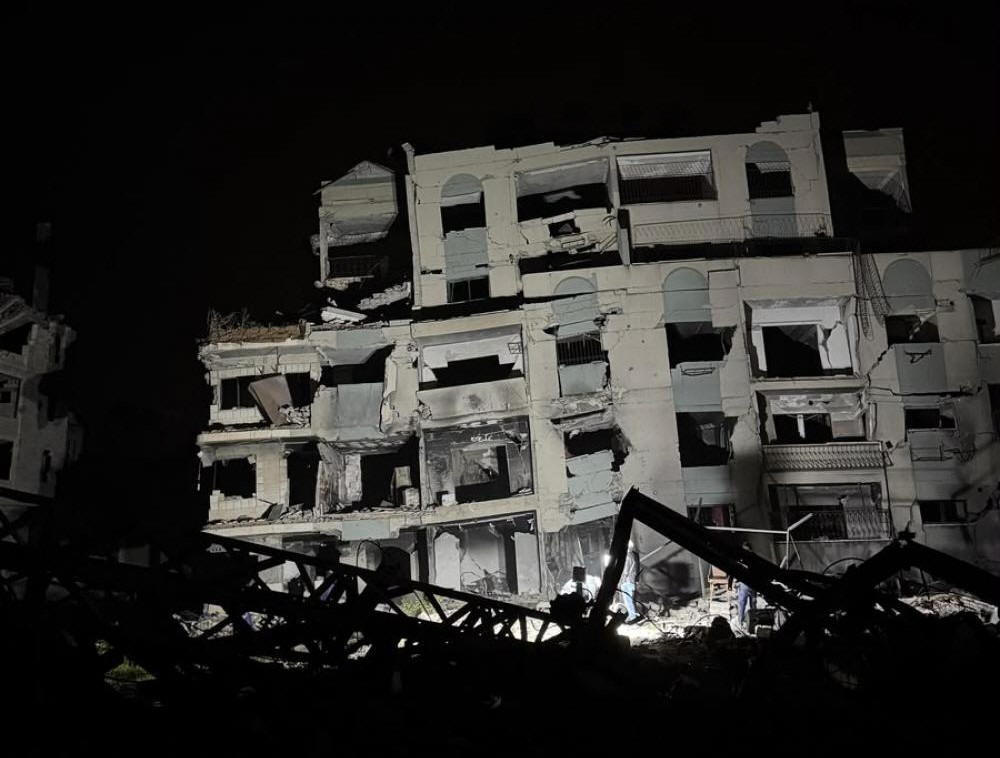 |
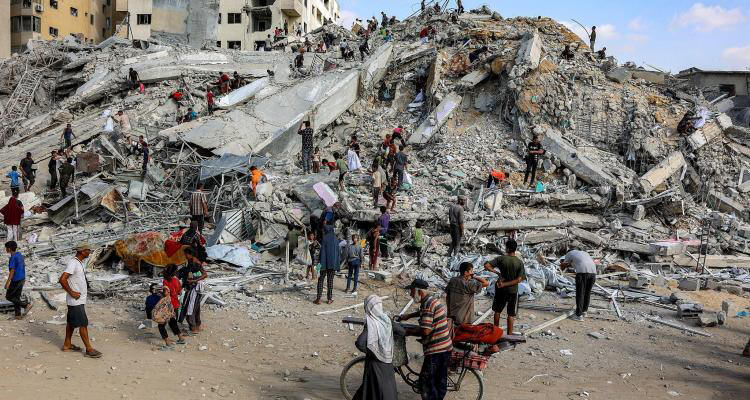
| Due to the Israeli blockade, Al-Sa'ada building in Gaza City collapsed, killing 20 Palestinians, including six children, and dozens still missing under the rubble, Sept 16, 2026. | Due to the Israeli blockade, Al-Sa'ada building in Gaza City collapsed, killing 20 Palestinians, including six children, and 100 still missing under the rubble, Sept 16, 2026. |
 |
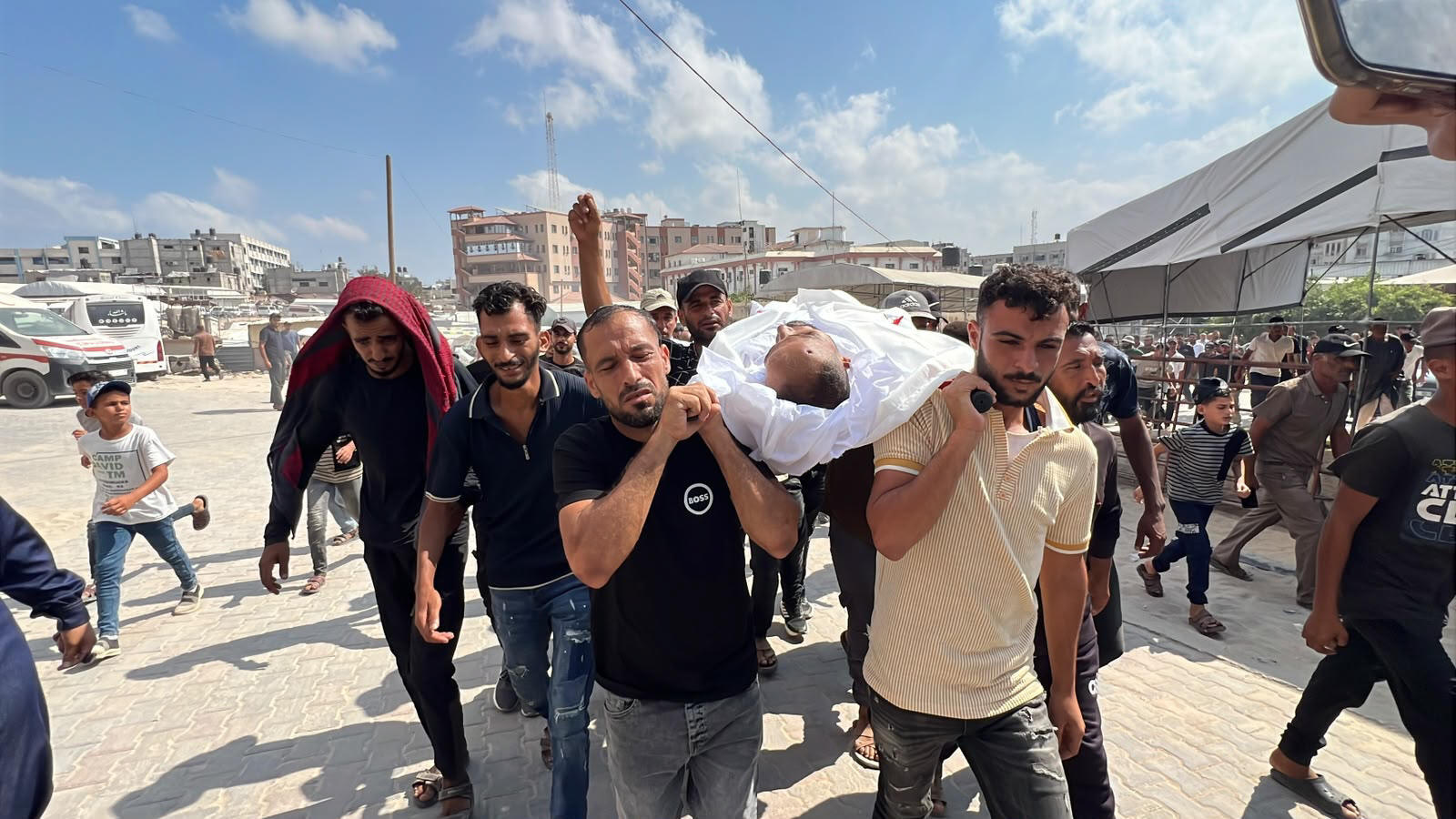 |
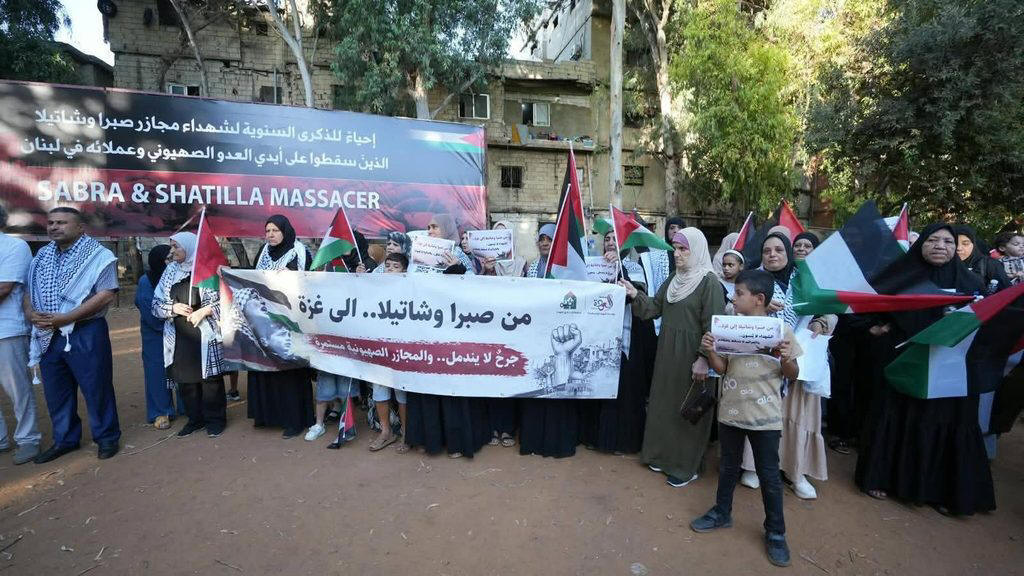
| A commemorative vigil of the Israeli-orchestrated Sabra and Shatila massacre in Beirut, recalled the names of Palestinians massacred over three bloody days, September 16, 2026. | The body of the Palestinian fisherman, Wisam Burhum El-Aqra', was recovered after he was killed by the Israeli naval fire off the coast of Dair El-Bala'h, September 15, 2026. |
 |
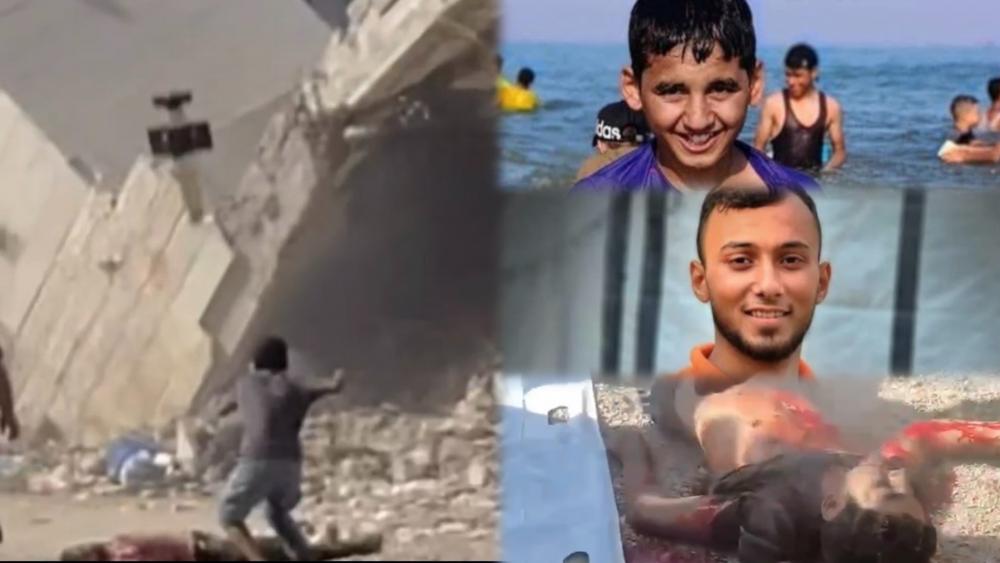 |
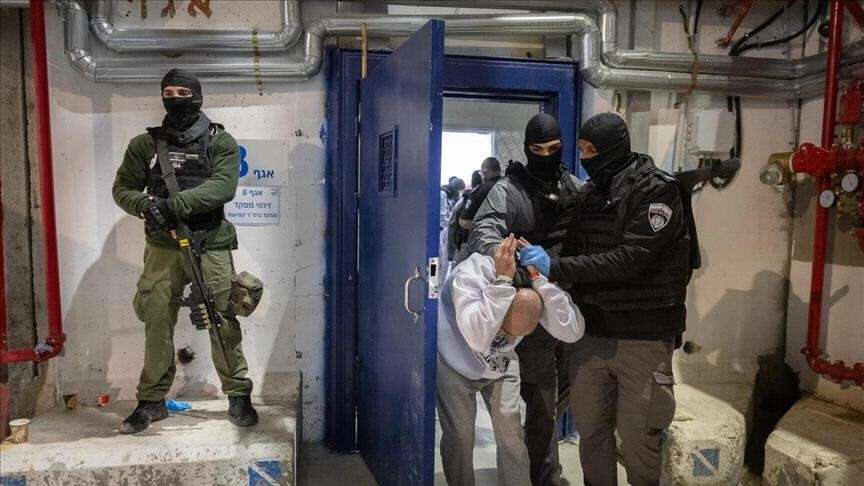
| 9,350 Palestinian political prisoners are still in Israeli occupation prisons, including 90 females and 350 children, suffering raiding rooms and attacking them, Sept 16, 2026. | Palestinian teenager Mu'hammed Al-Zeinati was killed in Gaza City, as he was trying to help an injured rescue worker, as an Israeli drone struck the area again, Sept 16, 2026. |
|
Due to the Israeli blockade, 20 Palestinians Killed, Including Six Children, 100 Still Missing Under the Rubble of a Collapsed building in Gaza City, September 16, 2026 |
|
***
***
***
20 Palestinians killed, 100 missing after Gaza apartment building collapses
Wednesday 16-September-2026
GAZA, (PIC)
Twenty Palestinians, including children, were killed and 13 others injured after a six-story residential building collapsed early on Wednesday in the Al-Sina’a Street area of western Gaza City, according to Gaza’s Civil Defense. Around 100 people remain missing beneath the rubble.
The Al-Sa'ada residential building, which contained 24 apartments, collapsed on displaced families sheltering inside and in several nearby tents, leaving dozens of people killed, injured or missing.
Civil Defense crews, working alongside Gaza Municipality teams, have been carrying out search-and-rescue operations since shortly after midnight in difficult conditions, amid fears that the death toll could rise.
At a press conference at the site, the Civil Defense said around 100 people remain unaccounted for beneath the rubble. Rescue teams have been working with Gaza Municipality, the Egyptian Committee, the Arab Authority, the International Committee of the Red Cross and the United Nations Development Program (UNDP) to recover victims and search for survivors.
The Civil Defense appealed to the international community to urgently provide heavy equipment, excavators and bulldozers needed to reach people trapped beneath the collapsed building.
It also warned that around 2,000 damaged residential buildings across Gaza remain inhabited by residents and displaced families despite being at risk of collapse, as there are no adequate alternative shelters.
The Civil Defense called on the international community, countries guaranteeing the ceasefire agreement, the UN Security Council and Peace Council official Nickolay Mladenov to pressure Israel to allow heavy rescue and reconstruction equipment into Gaza.
Warning of further building collapses
Gaza Mayor Yahya El-Sarraj warned that similar disasters could occur unless urgent action is taken to bring temporary housing and essential equipment into the Strip.
“This incident is not the first, and perhaps it will not be the last unless there is urgent intervention and the necessary equipment is allowed in to rescue people and rehabilitate damaged buildings,” El-Sarraj said.
He warned that the danger will increase as winter approaches, with strong winds and heavy rainfall threatening already weakened buildings.
Residents continue to shelter in damaged structures because they have nowhere else to go, despite repeated warnings that the buildings could collapse.
At least 34 Palestinians have previously been killed and dozens injured in the collapse of homes and buildings damaged by Israeli bombardment since the start of the war, according to the report.
Gaza authorities say Israeli restrictions on the entry of construction and reconstruction materials have prevented damaged homes from being repaired, leaving thousands of Palestinians living in structures at risk of collapse.
***
'Hamas blames Israel for Al-Saada building collapse, warns 2,000 buildings at risk
Wednesday 16-September-2026
GAZA, (PIC)
The 'Hamas Movement on Wednesday blamed Israel for the collapse of the Al-Sa'ada residential building on residents and displaced families sheltering inside in Gaza City, warning that nearly 2,000 damaged and inhabited buildings across the Gaza Strip are at risk of collapse.
In a statement, Hamas said the collapse marked another catastrophic humanitarian consequence of the war, noting that widespread destruction of homes and residential neighborhoods has forced thousands of Palestinians to seek shelter in damaged and structurally unstable buildings.
The Movement warned that a severe shortage of heavy machinery and rescue equipment threatens further loss of life. It called for the immediate entry of heavy equipment and civil defense machinery to allow rescue crews to reach people trapped beneath the rubble.
'Hamas cited the Gaza Civil Defense as saying that around 2,000 damaged buildings remain inhabited despite being at risk of collapse. It said the lack of safe shelter has left residents with little choice but to remain in dangerous structures, further compounding the humanitarian consequences of the widespread destruction.
The Movement called on mediators, the US administration and international actors to take immediate action to remove restrictions preventing the entry of rescue equipment and heavy machinery and to provide safe shelter for displaced Palestinians who have lost their homes.
'Hamas said its leadership had previously raised the urgent humanitarian consequences of the war in discussions with mediators and international parties.
The Al-Sa'ada building collapsed shortly after midnight in the Al-Sinaa area of western Gaza City. Since early Wednesday, Civil Defense crews have recovered the bodies of 20 Palestinians, including six children, while dozens of people remain missing beneath the rubble.
The collapse comes amid widespread destruction of residential buildings across Gaza, which has drastically reduced available shelter and forced displaced families to live in damaged structures despite the danger of collapse. Civil Defense crews also continue to face severe difficulties reaching destroyed buildings and removing rubble.
***
Palestinian fisherman killed the Israeli occupation naval forces, as Israel continues attacks on Gaza
Wednesday 16-September-2026
GAZA, (PIC)
The body of a Palestinian fisherman killed by Israeli naval fire was recovered on Wednesday, as the Israeli occupation forces continued violating the Gaza ceasefire through artillery shelling and gunfire across several areas of the enclave.
The body of fisherman Wisam Burhum El-Aqra' was recovered after he was killed on Tuesday by the Israeli naval fire off the coast of Dair El-Bala'h, in central Gaza.
Israeli artillery also shelled several areas in eastern Gaza on Wednesday morning, while Israeli military vehicles opened heavy fire.
In southern Gaza, Israeli artillery targeted eastern and southern Khan Younus, while Israeli military vehicles opened intense fire on areas east and south of the city. Israeli warships also fired toward the Khan Younus coast as Israeli drones continued flying over southern Gaza.
The attacks came after seven Palestinians were killed in Israeli strikes on Gaza City and Khan Younus on Tuesday, bringing the number of Palestinians killed since Monday to eight.
Among those killed was eight-year-old Amal Yasir Omar, while 14 others were injured when Israeli forces struck tents sheltering displaced Palestinians in El-Mawasi, west of Khan Younus.
In Gaza City, a Palestinian was killed and others were injured in an Israeli drone strike near El-Baidar area in the Shaikh 'Ijleen neighborhood. Three others were injured in another drone strike west of the Passport Square area.
Two Palestinians were also killed and several others injured in two Israeli strikes near the entrance to al-Furqan Mosque on Third Street in the Shaikh Radhwan neighborhood of northern Gaza City.
Local sources reported that 65-year-old Saleh Ramadan al-Dabbour, from 'Halawa Camp in Jabalya, was killed by Israeli gunfire. Yousuf Sa'duddeen El-Za'eem, 33, also died from wounds sustained in an Israeli strike near the 17 Roundabout in western Gaza City.
A'hmed al-Batsh was killed when an Israeli strike targeted a vehicle near El-Basha Supermarket in the El-Saftawi area of northern Gaza City. Several other Palestinians were injured, some seriously.
On Monday evening, 49-year-old Raafat Abu al-Zumr was killed, and others were injured when Israeli forces struck a tent sheltering displaced Palestinians in al-Mawasi, west of Khan Younus. Earlier, two Palestinians were killed and ten others injured in an Israeli drone strike on a tent opposite Yarmouk Stadium in central Gaza City.
Medical teams also recovered the body of a Palestinian who had been shot by Israeli forces near the so-called “Yellow Blocks” in the El-Mawasi area of Rafa'h.
The Israeli occupation forces have continued violating the ceasefire, in effect since October 10, 2025, through airstrikes, artillery shelling, gunfire and demolition operations inside the so-called Yellow Line, while restrictions on goods, humanitarian aid and travel remain in place.
According to the Palestinian Health Ministry, 1,375 Palestinians have been killed and 4,686 injured since the ceasefire, while 831 bodies have been recovered.
The overall death toll since October 7, 2023, has risen to 73,789 Palestinians killed and 174,798 injured, according to the ministry.
***
Mu'hammed Al-Zeinati tried to save civil defense member, but killed beside him
Tuesday 15-September-2026
GAZA, (PIC)
Eighteen-year-old Mu'hammed Al-Zeinati did not hesitate when he saw an injured civil defense rescuer following an Israeli strike in the Shaikh Radhwan neighborhood of western Gaza City. He rushed toward the scene to help, but moments later, Israeli aircraft struck the area again, killing Al-Zeinati as he tried to save him.
The attack began when an Israeli strike hit civil defense member Sharif Lubbad, leaving him wounded at the scene. Despite the continuing danger, Al-Zeinati ran toward Labad in an attempt to reach and rescue him.
Al-Zeinati was not a paramedic or a member of the civil defense. According to his friends, he was simply a young man who saw someone in need and did not hesitate to help. Before he could reach Lubbad, a second Israeli strike hit the same area.
At Al-Shifa Hospital in Gaza City, Mu'hammed’s father received the news that his son had been killed. Standing over his shrouded body, he struggled to comprehend the loss of a son whose life had ended at just 18.
“May God have mercy on you, my beloved, my hero,” his father said before adding in anguish, “I never got to rejoice in seeing him grow into a young man. God is sufficient for us, and He is the best disposer of affairs.”
Mohammed’s friend, Mu'hammed Al-Bal'awi, recalled the final moments before Al-Zeinati was killed, describing him as someone known among his friends for his energy, courage and readiness to help others.
Al-Bal'awi said they had been together with friends only shortly before the strikes, spending time together before the day suddenly turned into tragedy.
When Al-Zeinati saw that Lubbad had been injured, his friend said, he immediately rushed toward him. His focus was not on the danger surrounding him but on reaching the wounded rescuer.
Al-Zeinati ran toward the scene barefoot, trying to reach the civil defense member, but the second strike hit before he could save him.
“We were playing together just minutes earlier, and suddenly he was in a shroud,” Al-Bal'awi said.
He questioned why a young man attempting to help an injured person was targeted, saying Mohammed “ran to protect someone else and never came back.”
Al-Zeinati’s killing comes as civilians, paramedics and civil defense crews in Gaza continue to face severe risks while attempting to reach the sites of Israeli strikes, recover bodies and rescue the wounded.
According to official figures, around 100 civil defense personnel have been killed during Israel’s war on Gaza, alongside hundreds of killed and wounded medical and emergency workers.
Sharif Lubbad had been carrying out his duty of rescuing others when the first Israeli strike hit him. Mohammed Al-Zeinati, who belonged to no rescue team, then rushed forward to save him.
The second strike killed them both.
Al-Zeinati was killed beside the rescuer he had tried to save, leaving behind a family that had hoped to watch him grow and friends who remember a young man who, in his final moments, ran toward someone in danger instead of running away.
***
***Killing, Injuring, and Abduction of Palestinians in the West Bank by Israeli Occupation Regime Forces
***
IOFs launch widespread West Bank raids, kidnap Palestinians
Wednesday 16-September-2026
WEST BANK, (PIC)
The Israeli occupation forces (IOFs) raided several cities, towns and villages across the West Bank early Wednesday, carrying out home searches, arrests and detentions amid extensive military activity in several areas.
Helicopter deployment in Yatta, El-Khaleel (Hebron)
In Yatta, south of al-Khalil, the IOFs stormed the city with military vehicles and deployed a number of soldiers by helicopter. Footage circulating online showed military vehicles and soldiers moving through the city.
In southern al-Khaleel, the IOFs detained and mistreated a big number of Palestinians before arresting two Palestinians, including a child. The two were arrested after being held for more than four hours on Al-Ikhwa Street.
Raids and home searches in Nablus
In Nablus governorate, the IOFs troops broke into the city accompanied by Eitan armored vehicles and raided the Quran Academy area, as well as Asira and Jerusalem streets.
Israeli forces also raided the town of Awarta, south of Nablus, and searched several homes in the Balata al-Balad area east of the city.
Kidnappings and raids in Toulkarm
In Toulkarm governorate, IOFs raided the town of Dair El-Ghusoun to the north and searched a home.
The Israeli occupation forces also arrested a Palestinian man after raiding his home in the Al-Rasheed neighborhood, east of the Dthinnaba suburb of Toulkarm.
Raids in Jineen and Bait La'hm (Bethlehem)
In Jineen governorate, Israeli forces raided the village of Zubda, west of Jenin, and searched several homes.
The Israeli occupation forces also entered the town of Tuqu’, southeast of Bait La'hm (Bethlehem), and confiscated a motorcycle belonging to a delivery driver.
Illegal Israeli Jewish settlers gather in northern Jordan Valley
In the northern Jordan Valley, a group of the illegal Israeli Jewish settlers gathered near Palestinian homes in the 'Ain Ghazal El-Farisiya area as the Israeli occupation forces raids and movements continued across several parts of the West Bank.
***
9,350 Palestinian political prisoners in Israeli prisons: Thousands without trial and conditions deteriorate
Wednesday 16-September-2026
RAMALLAH, (PIC)
The number of the Palestinian political prisoners in Israeli prisons reached 9,350 prisoners, up to the beginning of current September, including 90 female prisoners and more than 350 children, according to data published by Palestinian prisoner institutions on Wednesday, based on information available to them and what the Israeli prison administration announced regarding some categories.
Data showed that the number of administrative detainees reached 3,176 detainees, while the number of detainees classified by Israel as “unlawful combatants” reached 1,393 detainees.
Prisoner institutions clarified that the last figure does not include all Gaza Strip detainees held in camps belonging to the Israeli army and classified within this category, as it also includes Arab detainees from Lebanon and Syria, which makes the actual numbers of detainees within this classification incomplete.
These figures point to the continuation of administrative detention as one of the most prominent detention tools used by Israel, as it holds thousands of Palestinians without public charges or trial, with the possibility of renewing detention orders for consecutive periods.
Administrative detention
Monthly data published by prisoner institutions during the current year shows that the numbers of administrative detainees remained at high levels, as their number reached 3,532 detainees at the beginning of April, then 3,376 at the beginning of May, and 3,244 at the beginning of July, before reaching 3,176 at the beginning of current September, according to the latest data published by the institutions.
Despite the limited numerical decline in this category during the past months, the Israeli occupation authorities continue issuing new administrative detention orders and renewing existing orders.
More than 350 child prisoners
New data indicates the detention of more than 350 children in Megiddo and Ofer prisons, at a time when the number of child prisoners remained at a level close to this figure in previous updates by prisoner institutions during the year.
In last May, institutions estimated the number of child prisoners at about 360 children, while their number reached about 350 in the April update, reflecting the continued detention of hundreds of Palestinian children in Israeli prisons. As for female prisoners, updated data indicates the presence of 90 female prisoners in Israeli prisons, amid the continuation of administrative detention against Palestinian women.
Deteriorating conditions
The prisoner crisis is not limited to the numbers of detainees, as recent testimonies published by the Commission of Detainees and Ex-Detainees Affairs speak of continuous deterioration in health and living conditions inside prisons. On 13 September, the Commission reported, based on visits by its lawyers and prisoner testimonies, an escalation of raids and restrictions in Negev prison, pointing to raiding rooms, attacking prisoners, and imposing strict measures inside sections.
On the same day, the Commission published a report on the conditions of sick prisoners in Ganot prison, speaking of a shortage in clothes and food, difficult living conditions, and medical neglect affecting sick prisoners, coinciding with the continuation of search and suppression measures.
The Commission reported a deterioration in the health and humanitarian situation of three prisoners in Ofer prison, including an elderly prisoner suffering from chronic diseases and the effects of an assault he was subjected to during his arrest.
The conditions of Palestinian prisoners in Israeli prisons acquire a more complex dimension regarding Gaza Strip detainees, given the difficulty of accessing complete information regarding the numbers of detainees in camps belonging to the Israeli occupation army and their detention conditions, and therefore prisoner institutions confirm that published figures do not necessarily represent a comprehensive and final total of all Palestinians held by Israel.
***
***
News Related to the Israeli Genocidal War on the Palestinian People
***
Beirut vigil marks Sabra and Shatila anniversary as an unhealed wound
Wednesday 16-September-2026
BEIRUT, (PIC)
The mass graves of Sabra and Shatila did not bury the story of the victims. Forty-four years later, the massacre still returns every September to the forefront of Palestinian memory, carrying with it a question that has found no answer: How can a crime of this scale pass through decades without justice for its victims?
From Beirut, a commemorative vigil reopened the file of the massacre and recalled the names of those killed over three bloody days. The scene appeared connected to a Palestinian memory still burdened by new victims and crimes whose files have yet to be closed.
The Palestinian Return Center and the Thabet Organization for the Right of Return on Wednesday marked the 44th anniversary of the Sabra and Shatila massacre with a popular vigil held at the memorial for the victims at the mass grave in the Lebanese capital, Beirut, under the title: “Sabra and Shatila: An unhealed wound.”
The event was held to remember the victims of the massacre, reaffirm the continued presence of their memory in Palestinian consciousness, renew demands for justice and accountability for those responsible for the crime, and stress that the passage of time does not erase the right of the victims and their families to truth and redress.
A massacre memory time could not erase
During the vigil, speeches were delivered on behalf of Ghobeiry Municipality by Palestinian journalist Hamza Bishtawi, Palestinian Return Center director Yasser Ali and Thabet Organization for the Right of Return director Sami Hammoud.
The speakers stressed the importance of keeping the Sabra and Shatila massacre present in Palestinian awareness and not allowing it to be reduced to a forgotten incident in the record of history.
They emphasized that recalling the massacre more than four decades later is not only about memory, but also about the demand for justice and accountability, as the question of responsibility for one of the bloodiest massacres suffered by Palestinian refugees in Lebanon remains unresolved.
The speakers said the victims remain present in Palestinian memory, and that commemorating them sends a message to new generations that crimes committed against Palestinians cannot lapse with time or be erased by the passing years.
Sabra and Shatila: An open wound
Sabra and Shatila have remained, throughout the past decades, a symbol of Palestinian memory in Lebanon, carrying images of the victims and the traces of a crime that left deep scars in the camp and in Palestinian consciousness.
Each year, the anniversary reopens questions of justice and accountability, especially as 44 years have not ended the demands of victims’ families and Palestinian organizations to uncover responsibility and hold those involved to account.
Participants in the vigil stressed that commemorating the massacre should not be limited to recalling its details. It must remain an occasion to remind the world of the victims’ rights and of the Palestinian people’s right to justice, return and freedom.
From Sabra and Shatila to Gaza
Gaza was also present in the speeches delivered during the commemoration, as participants drew comparisons between what happened in Sabra and Shatila and what Palestinians are experiencing today in terms of killing, destruction and displacement.
They said recalling Sabra and Shatila amid current events reflects the continued presence of massacres in Palestinian memory and confirms that Palestinian victims, across different times and places, share one demand: an end to crimes, justice for victims and accountability for those responsible.
In this sense, the Sabra and Shatila anniversary is no longer merely an annual occasion to recall the past. It has become a space to connect memory with the current Palestinian experience and affirm that what happened in the past remains present in Palestinian consciousness, especially as victims continue to fall in the Palestinian territories.
Justice does not expire
The speakers stressed the need to hold accountable those responsible for the massacre and anyone proven responsible for crimes against Palestinians, affirming that justice remains a standing demand no matter how much time passes.
They said loyalty to the victims of Sabra and Shatila is not limited to placing wreaths or reciting al-Fatiha on the anniversary of the massacre. It requires continued work to uphold their rights, keep their cause present in public awareness and continue demanding accountability for those responsible for the crime.
They also stressed that the right of return is a central part of the Palestinian cause, and that the presence of Palestinians in Lebanon’s camps does not cancel their connection to their national rights, foremost among them the right to return to the homes from which they were displaced.
A memory that does not bow to forgetting
At the end of the vigil, participants recited al-Fati'ha for the souls of the victims and laid a wreath at their grave, in a scene that carried a message of loyalty to those killed and affirmed their continued presence in Palestinian memory.
Forty-four years after the Sabra and Shatila massacre, the mass grave in Beirut remains a witness to a bloody chapter in the history of Palestinians in Lebanon, a chapter the years have not folded away and whose effects have not ended in the memory of survivors and victims’ families.
Beneath the gravestones and amidst the sacred memory of those lost, the call for justice echoes anew each year. Sabra and Shatila remain a witness that Palestinian memory is not measured by the age of an event, but by the mark it leaves and by the rights still awaiting redress.
***
===============================================================================================================================
بِسْمِ اللهِ الرَّحْمَـٰنِ الرَّحِيمِ
"مِنْ أَجْلِ ذَٰلِكَ كَتَبْنَا عَلَىٰ بَنِي إِسْرَائِيلَ أَنَّهُ مَنْ قَتَلَ نَفْسًا بِغَيْرِ نَفْسٍ أَوْ فَسَادٍ فِي الْأَرْضِ فَكَأَنَّمَا قَتَلَ النَّاسَ جَمِيعًا" (الْمَائِدَةُ ، 5: 32).
"وَمَنْ يَقْتُلْ مُؤْمِنًا مُّتَعَمِّدًا فَجَزَاؤُهُ جَهَنَّمُ خَالِدًا فِيهَا وَغَضِبَ اللَّهُ عَلَيْهِ وَلَعَنَهُ وَأَعَدَّ لَهُ عَذَابًا عَظِيمًا" (النِّسَاءُ ، 4: 93).
"إِنْ أَحْسَنتُمْ أَحْسَنتُمْ لِأَنفُسِكُمْ ۖ وَإِنْ أَسَأْتُمْ فَلَهَا ۚ فَإِذَا جَاءَ وَعْدُ الْآخِرَةِ لِيَسُوءُوا وُجُوهَكُمْ وَلِيَدْخُلُوا الْمَسْجِدَ كَمَا دَخَلُوهُ أَوَّلَ مَرَّةٍ وَلِيُتَبِّرُوا مَا عَلَوْا تَتْبِيراً (الإسْرَاءُ ، 17: 7).
In the Name of Allah, the Beneficent, the Merciful
"Because of that, We decreed upon the Children of Israel that whoever kills a soul, unless for a soul, or for corruption in the land, it is as if he had killed humankind entirely" (The Holy Quran, Al-Ma-ida, 5: 32).
"And whoever kills a believer intentionally, his recompense is Hell, wherein he will abide eternally, and Allah has become angry with him, and has cursed him, and has prepared for him a great torment" (Al-Nisa, 4: 93).
"If you do good, you do good for yourselves; and if you do evil, (you do it) to yourselves. Then, when the latter (final) promise comes, they (your enemies) will sadden your faces, and enter the Masjid (in Jerusalem), as they entered it the first time, and will destroy what they had taken over with (total) destruction (Al-Isra, 17: 7).
***
While brutal force has been used to create Zionist Israel and sustain it thus far, Zionist claims to Palestine are false. Actually, from the five thousand years of known written human history, there has been a continuous Palestinian-Canaanite presence in the Holy Land. Despite the Zionist false claims, the ancient Israelites ruled part of the land for only 85 years (during the reign of Prophets David and Solomon , peace be upon them, and Solomon's son).
After that, the Egyptians conquered Palestine-Canaan in 925 BC, followed by Assyrians, Babylonians, Persians, Greeks, and Romans, before the Arab Muslim rule, starting from 636 AD.
By the Time Jesus, peace be upon him, started his mission, the three population groups of Canaanites, Palestinians, and Israelites were melted together in religion and language. Most of them became Christians when Constantine converted in 313 AD. Then, most of them became Muslims in the 7th and 8th centuries AD.
So, Palestinian Muslims, Christians, and Jews are the ones who have the right to claim descent from ancient Israelites, Palestinians, and Canaanites, not Zionists from other continents.
No matter what the Zionists and their supporters do, they cannot change the will of God, Who promised the Holy Land to Abraham and his descendants, basically the Palestinian Muslims and Christians.
No matter how much persecution and aggression the Zionists and their supporters inflict upon the Palestinian people, they will never be able to force them out of the Holy Land, which Allah, praise to Him, promised for them, and kept His promise ever since.
This is a necessary brief background to understand the US-Backed Zionist Israeli continuous wars against the Arab nation generally, and the Palestinian people in particular, which included the wars of 1948, 1956, 1967, 1978, 1982, the brutal crushing of the two Uprisings (1987-1993 and 2000-2004), 2009, 2012, 2014, 2021, and the current genocidal war on Gaza (Since October 7, 2023), which has culminated a blockade of Gaza since 2007. In addition, the Israeli occupation and apartheid regime launched so many covert operations, raids, and air strikes on many Arab states since 1948.
The following news stories are just examples, not a systematic record, of the Israeli occupation government abuse, mistreatment, and violations of Palestinian human rights, on daily basis.
http://english.wafa.ps/, https://english.palinfo.com/, https://imemc.org/, https://paltoday.ps/ar/
***
***
Editorial
Notes about terms
& names of
people and places:
1. Names of people and places have been standardized to
match standard Arabic grammatical rules.
2. Underlined
letters and letters preceded by an apostrophe are
references to Arabic letter sounds, which does not exist in the English
alphabet.
3. The English letter i is
equivalent to the Arabic short vowel known as kasra,
as in Ibraheem
and Qasim
as well as in the English words sit and bit. So, it is incorrect to use
it as a long vowel for such Arabic names as Jameel and Jibreel.
4. The English letter e is
equivalent to the Arabi short vowel known as fat'ha,
as in A'hmed
and Mu'hammed.
5. It is more accurate to refer to the
land-grabbing Israelis,
who establish illegal settlements in the Palestinian territory of the
West Bank, as illegal
Israeli settlers, than referring to them as colonists.
The term colony is
a reference to a large entity or a country, such as American states before
independence. It was also a reference to Egypt, and India,
when they were British colonies.
In addition, the term "colony"
represents a positive
nostalgic theme, in the minds of native speakers of
English, particularly in America and Britain.
6. It is more
accurate to use the verbs "abduct"
and "kidnap"
than the verbs "detain"
and "arrest,"
in reference to taking Palestinian citizens by force to prisons and
interrogation centers, by Israeli occupation regime soldiers. This is
because the presence of the Israeli occupation regime forces is illegal
in the Palestinian territories, and they have no jurisdiction over the
Palestinian people.
Click here for more about using the apostrophe and the underlining of
letters in the transliteration of Arabic names.
***
Names of some of the Palestinian cities, as pronounced in standard Arabic, and their foreign names in parentheses:
Al-Khaleel (Hebron)
Al-Nusayrat
Al-Quds (occupied Jerusalem)
Aree'ha (Jericho)
Al-Zaytoun (al-Zeitoun)
Bait (Beit)
Bait La'hm (Bethlehem)
Dair El-Bala'h
Jineen (Jenin)
Khan Younus (Khan Younis)
***
Person's names as pronounced in standard Arabic:
A'hmed, 'Hasan, Mu'hammed, Younus, Yousuf,
'Hasan Mulai'hat,
***
Conflict terminology
The Israeli occupation apartheid regime (the Israeli government)
Illegal Israeli settlers (instead of settlers, colonists)
A group of the illegal Israeli settlers
***
Fair Use Notice
This site contains copyrighted material the
use of which has not always been specifically authorized by the copyright
owner. We are making such material available in our efforts to advance
understanding of environmental, political, human rights, economic,
democracy, scientific, and social justice issues, etc. We believe this
constitutes a 'fair use' of any such copyrighted material as provided for
in section 107 of the US Copyright Law. In accordance with Title 17 U.S.C.
Section 107, the material on this site is
distributed without profit to those
who have expressed a prior interest in receiving the included information
for research and educational purposes. For more information go to: http://www.law.cornell.edu/uscode/17/107.shtml.
If you wish to use copyrighted material from this site for purposes of
your own that go beyond 'fair use', you must obtain permission from the
copyright owner./font>
|
|||||||||||||||||||